

The short answer
What to know first
- Compare the same quantities, dimensions, accessories and installation scope before comparing totals.
- Published product prices are starting references. Your written proposal should explain the selected configuration and any project-specific work.
- You can buy in phases while planning the whole garage first, so today’s storage leaves room for tomorrow’s workbench or cabinet run.
Start with what the quoted price includes
Two quotes labeled ‘garage storage’ can describe very different projects. One might include a single rack; another might include wall panels, accessories, cabinets and installation. Ask for an itemized description before judging whether one total is high or low.
Record the product configuration, quantities, installation, any delivery or assembly, and what happens to existing shelving. Ask whether wall preparation, painting, moving belongings or disposal is included, excluded or still to be determined. A clear exclusion is easier to budget for than an assumption discovered on installation day.
Dimensions and accessories change the useful scope
For cabinets, compare the same combination of tall units, bases, wall units, drawers and worktop. Overall width alone does not describe the storage inside. Cabinet depth also changes parking space, so the largest configuration may not be the most useful one.
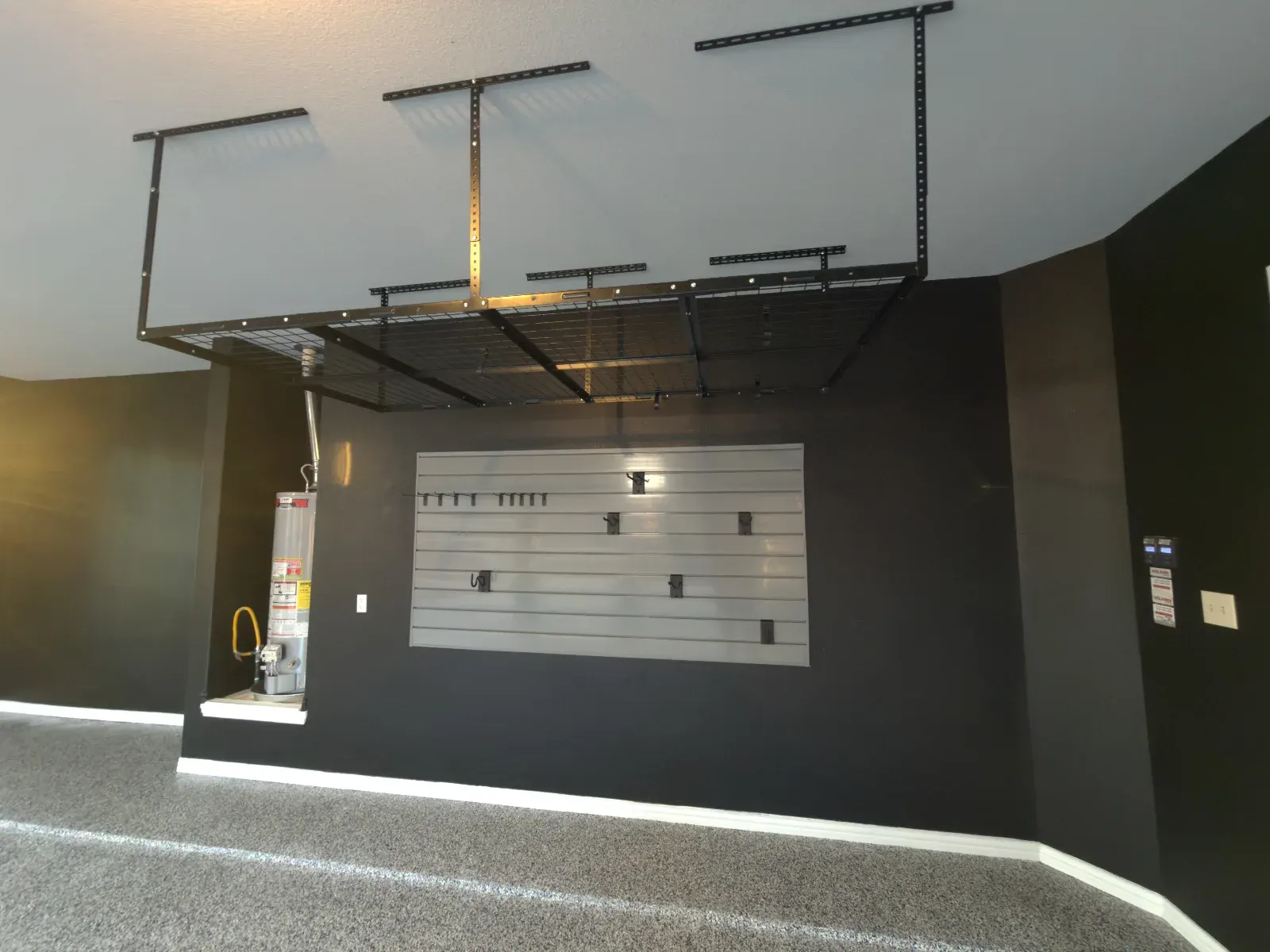
For slatwall, distinguish panel coverage from the hooks, baskets and shelves that make it usable. For overhead racks, record the exact size and configuration rather than comparing the word ‘rack.’ Any mounting or site work belongs in the written scope; a product price alone cannot settle those details.
Build a scope around one of these three needs
Use the linked storage catalog for current published prices and the scope stated for each product. A starting price is not a total for every garage. Product selection, quantities, accessories and site requirements must match the proposal before the numbers are directly comparable.
These three examples describe different storage jobs, not fixed packages. Choose the closest problem, then check the proposed products against your inventory and available space.
Clear the daily-use floor
Start with the sports bags, tools or other items you retrieve often. Scope the required wall coverage and compatible accessories, then check the depth of the loaded system beside your vehicle. Include the accessories in the comparison.
Give seasonal bins a home
Count and measure the bins first. An overhead option depends on suitable structure, clearance and access; accessible shelving may suit you better. The quote should identify the chosen product, quantity and installation requirements.
Create an enclosed work area
List what belongs in drawers or cabinets and how you will use the work surface. Compare cabinet dimensions, internal layout, worktop, accessories and installation as one scope. Leave room to open drawers and stand at the bench.
See the current installed storage catalog for approved configurations and prices. Choose products and quantities in the estimator; the starting-idea planner does not calculate a total.
Plan the whole layout, then choose the first phase
Start with the problem that improves your everyday routine most. If you cannot park because sports gear covers the floor, a focused wall-storage phase may help more immediately than a full cabinet run. If seasonal bins occupy the only work area, their new home may come first.
Sketch future phases before mounting the first system. Keep a future cabinet run clear, consider where a worktop will sit and coordinate wall preparation or painting. Ask whether completing work in separate visits changes the quoted installation scope. Do not assume a later add-on will have the same total as buying everything together.
At the end of phase one, use the garage for a while. What still lands on the floor? What is hard to retrieve? Those observations can make phase two more useful than purchasing extra storage simply because there is space left.
Use the same checklist for every storage quote
Write ‘not stated’ when a proposal leaves something unclear and ask for clarification. This is especially helpful when comparing a product-only listing with an installed project. The goal is to understand what each total buys and which questions remain open.
Storage quote comparison
Print this sheet to fill in by hand. Leave unknown items as questions to confirm.
| Compare | Quote A | Quote B |
|---|---|---|
| Exact products, dimensions and quantities | ||
| Included hooks, baskets, shelves and worktop | ||
| Installation, assembly and any delivery scope | ||
| Mounting and clearance questions to resolve | ||
| Existing storage removal and surface preparation | ||
| Who clears and returns stored belongings | ||
| Exclusions, optional items and applicable taxes | ||
| Product and installation warranty terms | ||
| Total for this phase and assumptions for future work |
Turn a starting idea into a project conversation
Bring your priority list, photos and any measurements you already have. The two-question Storage Planner can help you find a starting direction without measuring or signing up. It does not produce final quantities or an installed quote.
The Lewisville project provides a real example of storage within a broader remodel. Use the finished photos for context, and keep your budget tied to your own written scope. When flooring or painting is also planned, discuss the combined sequence before ordering storage.
Sources and further reading
Product instructions apply to the named product and conditions. Your agreed scope and project-specific instructions describe your installation.
Your next useful step